Motivation
Content repositories
SAP documents are organized in content repositories. The content repositories exist on SAP side and on ImageMaster side and are mapped in the corresponding SAP transaction.
As long as SAP is the leading system used for managing the SAP documents the archive has very little knowledge on the documents. All relevant metadata and business object information of the SAP document are handled on SAP side making it very hard to search for SAP documents on ImageMaster side. The only information stored in ImageMaster are typically the SAP document ID and the name of the content repository.
This is caused by the nature of the SAP ArchiveLink interface. The SAP ArchiveLink interface is a set of http requests allowing several operations for documents (create, read, update and delete) in a content repository, but does not provide a possibility to pass custom metadata to the archiving system to enrich the stored data.
SAP document types in content repositories
In an ideal setup one ImageMaster document type is connected to one content repository. Content repository C1 uses ImageMaster document type T1, content repository C2 uses ImageMaster document type T2 and so on.
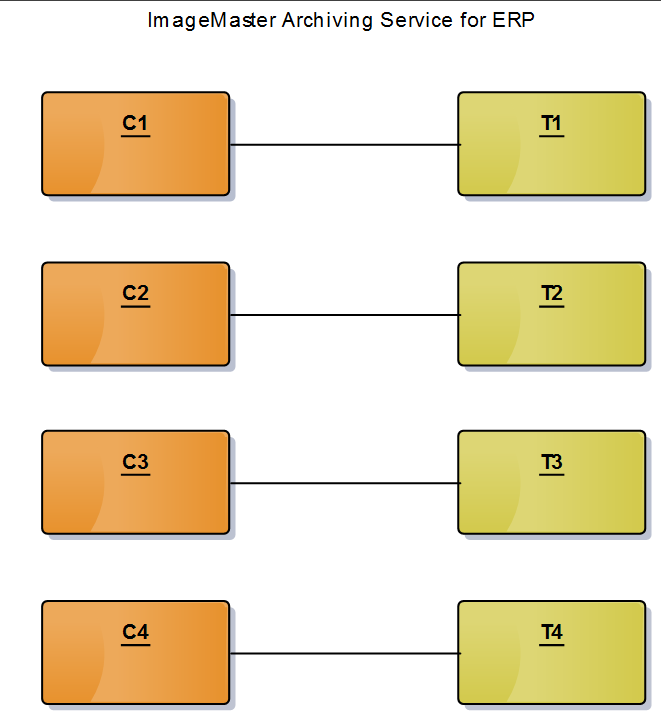
Figure 512: Ideal content repository configuration
But multiple content repositories may share one ImageMaster document type as well. Content repository C1 uses ImageMaster document type T1, content repository C2 uses ImageMaster document type T1 and so on.
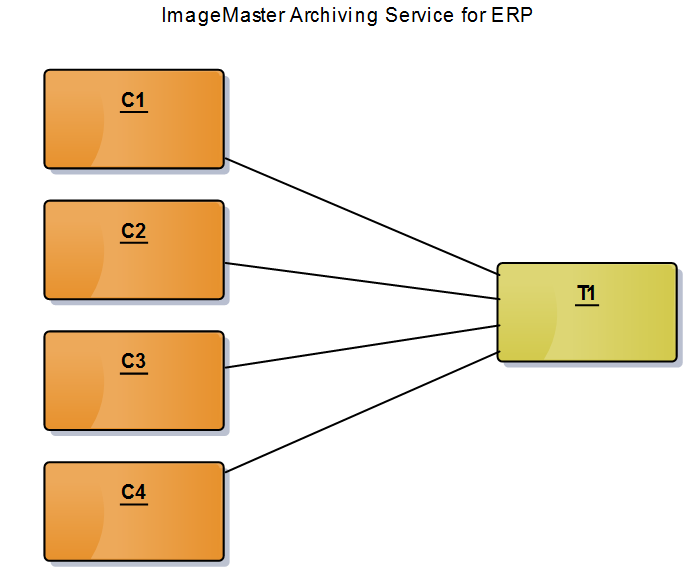
Figure 513: Simple content repository configuration
In connection with ImageMaster Messaging for ERP (see [SM ERP MSG]) even more ImageMaster document types may be connected to a content repository. An ImageMaster document type T1 is configured for Messaging to report documents to the SAP content repository C1 and content repositories C1 and C2 share the ImageMaster document type T2.
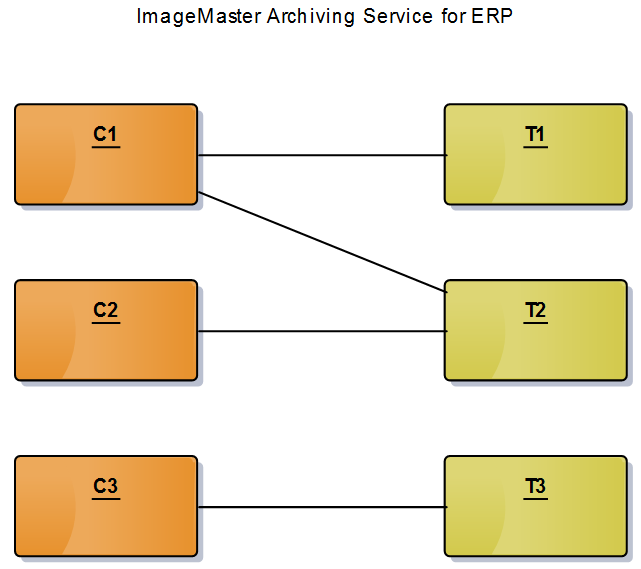
Figure 514: Complex content repository configuration
What generally has to be kept in mind is that it is not always clear which types of SAP documents are stored in a content repository. A content repository may be used for archiving invoices as well as for archiving dunning letters.
Types of SAP documents
There are two types of SAP documents that are relevant for a content repository:
-
SAP outbound document: if the document was created in SAP and archived to ImageMaster via the ArchiveLink Interface
-
SAP inbound document: if the document was registered in SAP by the ImageMaster Messaging Service
This makes a difference regarding the ImageMaster document types used for both kinds of SAP documents:
For SAP outbound documents typically an ImageMaster document type with no (user defined) metadata is used. Those documents are in general exclusively used by SAP via the ArchiveLink Interface.
For SAP inbound documents ImageMaster document types may have user defined metadata as these kinds of documents may not be exclusively used by SAP.
In the context of the Messaging Service also a valid license for ImageMaster MetadataSync for ERP is required, if values in ImageMaster shall be updated via the transfer mapping:
With the option “generic”, that can be configured in the AdminClient, any RFC module on SAP side can be used to specify the transfer mapping, which is used to update values originating from SAP in ImageMaster. However, the update option can only be used with a valid license for ImageMaster MetadataSync for ERP.
Independent archive
The main motivation for enriching SAP documents stored in ImageMaster with metadata is to create an independent archive. This enables any client to research and display documents e.g. containing a specific invoice number. The benefit is an archive that can be used without the need of being connected to an SAP system / SAP client. As a result a legacy archive containing SAP documents of outdated and inactive SAP systems may be established with no loss of information for the end user.